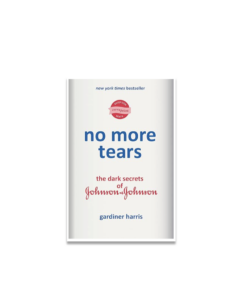

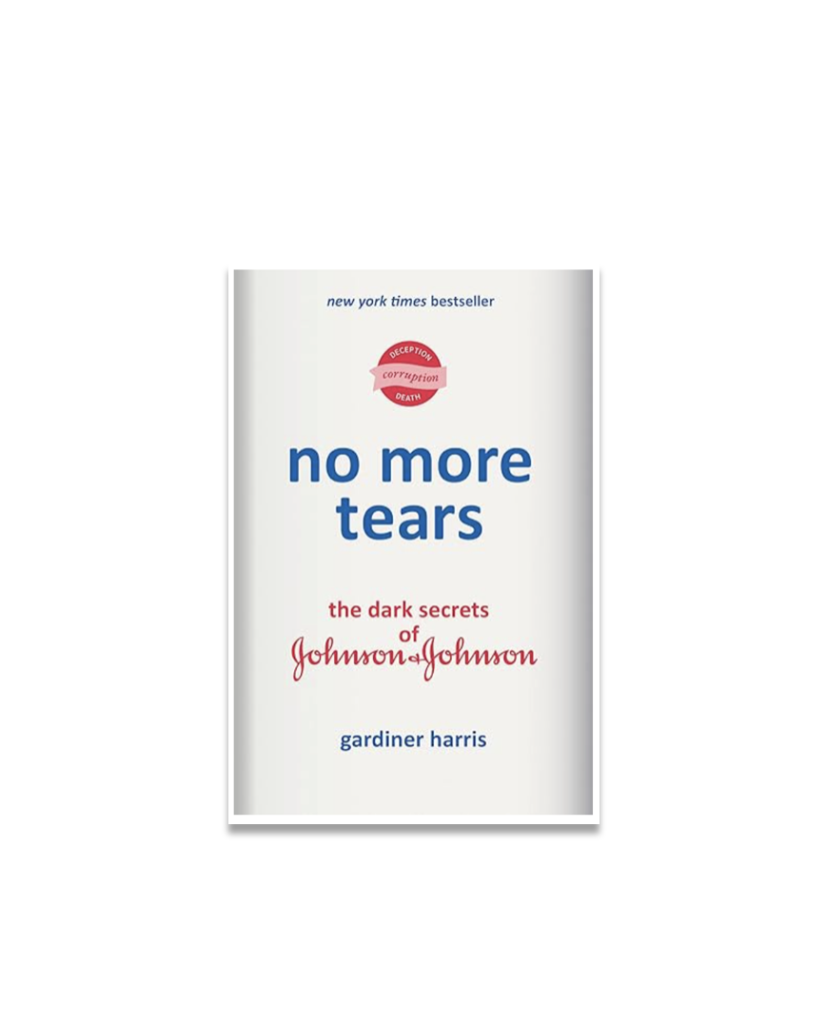
Author: Gardiner Harris
Publisher: Random House (2025)
Print Length: 453 pages
===============================================
Gardiner Harris’s No More Tears: The Dark Secrets of Johnson & Johnson reads like the kind of book you start out of curiosity and finish with a low-grade sense of betrayal. Johnson & Johnson isn’t just another corporation—it’s a brand that many of us associate with baby shampoo, Band-Aids, and a kind of wholesome, medicine-cabinet trust. Harris’s central accomplishment is showing, patiently and often chillingly, how that image was cultivated and protected even as the company repeatedly put profits ahead of patient safety.
Harris, a longtime investigative reporter for The New York Times, structures the book as a series of case studies rather than a single linear exposé. Each chapter focuses on a product or scandal—Risperdal, Duragesic patches, baby powder, Tylenol, medical devices—and shows how the same patterns recur. Executives downplay risks. Internal scientists raise concerns and are ignored or sidelined. Marketing teams push drugs into broader and more vulnerable populations. Regulators lag behind. Settlements are paid. And the brand survives, often intact.
The most disturbing sections involve Risperdal, an antipsychotic drug that J&J aggressively marketed for off-label use in children and the elderly, despite known risks such as diabetes, massive weight gain, and gynecomastia in boys. Harris walks readers through internal documents and testimony that make it difficult to chalk these outcomes up to ignorance or innocent error. The impression is not of a rogue employee or a single bad decision, but of a corporate culture that consistently framed ethical boundaries as obstacles to be managed.
What makes Harris especially effective is his restraint. He doesn’t rant. He doesn’t editorialize much. Instead, he lets emails, memos, and courtroom transcripts do the work. That journalistic discipline gives the book credibility, but it also makes the revelations hit harder. When you see executives calmly discussing how to “neutralize” critics or reframe safety concerns as PR issues, it’s far more unsettling than if the author were shouting at you from the page.
That said, the book isn’t perfect. At times, the accumulation of examples can feel overwhelming and repetitive. You get the point fairly early on: this is a pattern, not a fluke. Some readers may wish Harris had spent more time analyzing why J&J, of all companies—with its famous Credo emphasizing responsibility to patients and communities—became so adept at rationalizing harm. The Credo appears throughout the book, but mostly as an ironic counterpoint rather than a subject of deeper psychological or organizational analysis.
Another limitation is that Harris largely avoids engaging with possible defenses of the company beyond noting them briefly before dismantling them. While this keeps the narrative focused, it occasionally flattens the moral landscape. Pharmaceutical development is genuinely complex, and risk-benefit calculations are rarely clean. A more sustained exploration of how executives justify their decisions internally—even when they believe they are acting responsibly—might have added nuance without diluting the critique.
Still, these are relatively minor quibbles. One of the book’s greatest strengths is how it exposes the weaknesses of the regulatory system. The FDA, underfunded and politically constrained, often appears reactive rather than proactive. Harris shows how companies can overwhelm regulators with data, exploit loopholes, and delay meaningful action for years—all while patients continue to suffer. By the end, it’s hard not to conclude that the problem is structural, not just corporate.
The prose itself is clear, accessible, and surprisingly readable for a book so dense with facts and legal detail. Harris writes like a seasoned reporter explaining a complicated story to an intelligent friend over coffee. He assumes curiosity, not expertise, and that makes No More Tears approachable for general readers without dumbing anything down.
Ultimately, No More Tears is less about Johnson & Johnson alone than about what happens when trust becomes a business asset rather than a moral commitment. Harris doesn’t argue that J&J is uniquely evil; if anything, he suggests it may be uniquely representative. That’s what lingers after you finish the book—not just anger at one company, but unease about an entire industry that relies on public faith while systematically testing its limits.
This is not a comforting read, especially if you grew up believing that some corporate logos stood for something more than shareholder value. But it’s an important one. Harris forces readers to confront an uncomfortable truth: “trusted” companies don’t deserve trust by default. They earn it—or lose it—through their actions. And in No More Tears, Johnson & Johnson loses it again and again.
Rating: 4.5/5