
Author: Zack Kass
Publisher: Wiley (2026)
Length: 256 pages
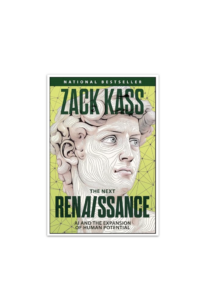
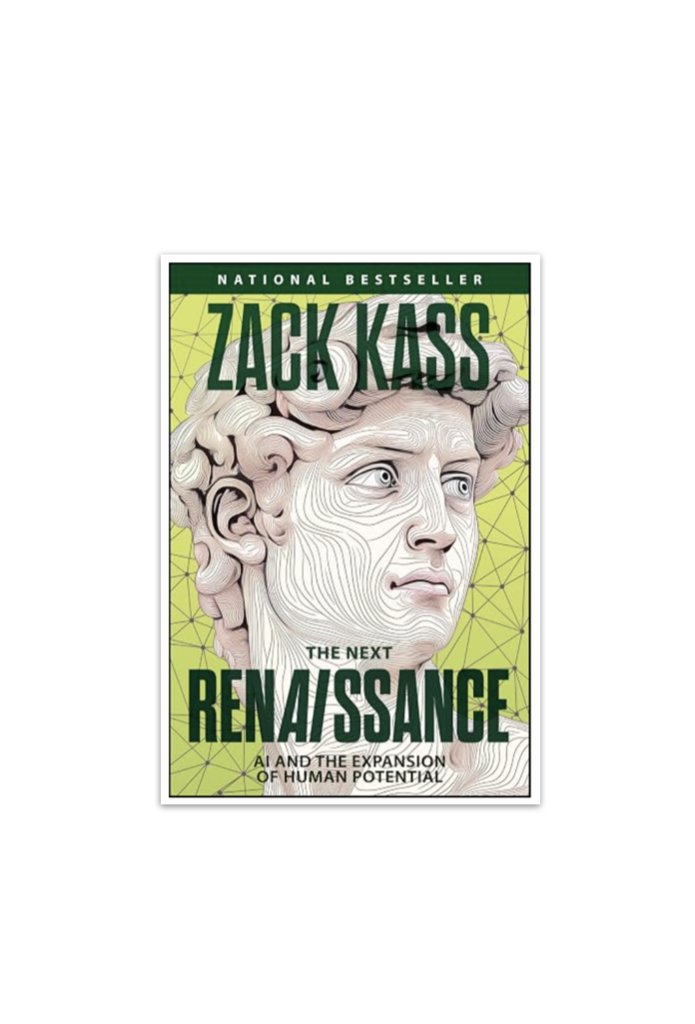
There are plenty of books about artificial intelligence that leave me either worried about the future or exhausted from trying to understand it. Zack Kass’s The Next RenAIssance: AI and the Expansion of Human Potential does something different. It leaves me feeling optimistic.
And that is both the book’s greatest strength—and, at times, its greatest weakness.
Kass, a former OpenAI executive, believes artificial intelligence can usher in a new Renaissance by expanding rather than diminishing human potential. His argument is that we should stop thinking of AI primarily as a technology that will replace people and start thinking of it as a tool that can make people more capable, productive and creative.
I like that argument. In fact, I like it a lot.
We have heard enough about AI taking our jobs, destroying creativity and eventually taking over the world. Kass offers a badly needed alternative: What if we concentrated less on what AI might take away from us and more on what it might give us?
For business leaders, that is an important question.
Kass is particularly persuasive when he argues that AI could free people from mundane, repetitive work and allow them to spend more time on things that are distinctly human—curiosity, empathy, creativity, judgment and relationships. In an AI-driven workplace, the skills we once dismissed as “soft” may become some of our most valuable assets.
But here is where I began to push back.
Kass is so committed to the optimistic case for AI that I sometimes felt he was arguing the prosecution’s case for the defense. He acknowledges AI’s risks, including job displacement and the enormous economic and social disruption that could accompany it. But too often those concerns feel like speed bumps on the road to his preferred destination rather than serious obstacles that could fundamentally change the journey.
Consider employment.
It is easy to say that AI will eliminate routine jobs and create opportunities for people to do more meaningful work. I hope that happens. But history tells us that technological revolutions rarely distribute their benefits evenly.
A 55-year-old administrative worker whose job disappears may not find much comfort in being told that AI will create a more creative economy. Someone still has to help that person make the transition.
That is one of my frustrations with The Next RenAIssance. Kass is very good at describing what could happen. I wanted more about what we should do when the transition becomes painful.
I had a similar reaction to his discussion of education. AI could be an extraordinary teaching tool. Imagine every student having access to an inexpensive, personalized tutor capable of explaining a difficult concept in five different ways.
But there is another possibility: students could use AI not to learn more, but to learn less. There is a difference between using AI to expand human intelligence and using it to avoid exercising human intelligence altogether.
That distinction deserves more attention.
I also question the Renaissance analogy, at least to some degree. It is clever, memorable and makes for a great title. But the original Renaissance was not simply a technological upgrade. It was a complicated cultural transformation involving art, science, politics, religion and economics.
AI may eventually produce a transformation of comparable magnitude. But we don’t know that yet.
Kass occasionally seems to confuse what could happen with what will happen.
Still, I don’t want my criticism to obscure what he gets right.
His most important contribution may be psychological rather than technological. He reminds us that our attitude toward AI matters. If we assume machines are inevitably going to replace us, we may fail to build workplaces and institutions that allow humans and machines to work together.
And Kass is right about something else: Technology should remain the tool, not become the objective.
That is a message business leaders would do well to remember.
My other criticism is that the book could have used a tougher editor. Kass has a compelling central argument, but he sometimes makes the same point more than once. The book would have been stronger—and more persuasive—if he had trusted the reader a little more.
Despite those shortcomings, I came away from The Next RenAIssance more encouraged than discouraged.
I’m not completely sold on Kass’s vision of the future. I think he underestimates some of the disruption, overestimates our ability to manage it and is occasionally too quick to assume that AI’s benefits will outweigh its costs.
But I appreciate what he is trying to accomplish.
Kass is asking us to imagine a future in which AI doesn’t diminish what it means to be human but actually gives us more opportunity to be human.
That is a future worth pursuing.
Whether we can actually get there is another question.