
A Good Idea That Takes Too Long to Make Its Point
Author: Matthew Barzun
Publisher: Penguin Publishing
Length: 271 pages
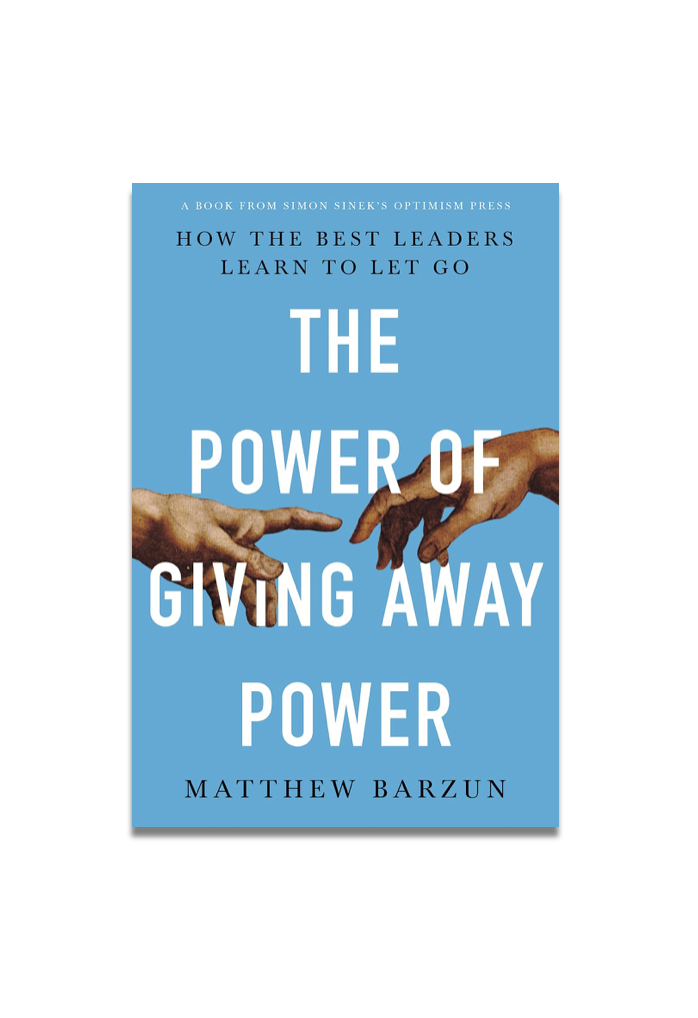
I like the idea behind Matthew Barzun’s The Power of Giving Away Power.
That’s probably why I found the book so frustrating.
Barzun’s central argument is that good leaders shouldn’t try to control everything. Instead, they should distribute authority, give people room to make decisions and create organizations in which employees aren’t simply waiting for instructions from the top.
Who could argue with that?
The problem is that Barzun spends an entire book arguing for an idea that, while worthwhile, isn’t nearly as revolutionary as he seems to believe.
The Power of Giving Away Power: How the Best Leaders Learn to Let Go was originally published in 2021. Barzun, a former U.S. ambassador to the United Kingdom and Sweden and a veteran of business and Barack Obama’s political organization, has an interesting résumé and plenty of firsthand experience with organizations. A new paperback edition appeared in 2025.
His framework is built around two images: the pyramid and the constellation.
The pyramid represents the traditional organization. Authority resides at the top and filters downward. The constellation represents Barzun’s preferred model. Individuals have their own responsibilities and identities, but they are connected and empowered to act rather than constantly seeking permission from above.
It’s an appealing metaphor.
And Barzun has some interesting examples. He points to organizations such as Visa and Wikipedia, as well as Obama’s political campaigns, to demonstrate how decentralized power can produce remarkable results.
The problem is that an interesting metaphor doesn’t necessarily make an interesting book.
As I read, I kept waiting for Barzun to get to the difficult part.
How much power should a leader actually give away?
When should a leader intervene?
What happens when empowered employees make bad decisions?
What happens when two people with authority disagree?
And what about organizations in which hierarchy isn’t simply a management preference but a necessity?
Those questions matter.
It’s relatively easy to advocate giving employees more authority when everyone is pulling in the same direction. It’s considerably harder when the company is losing money, a major customer is threatening to leave or a decision has to be made immediately.
Someone still has to be in charge.
That doesn’t invalidate Barzun’s argument. It does, however, make it considerably more complicated than the pyramid-versus-constellation comparison suggests.
Having spent much of my career in business, I’ve seen both sides of this equation. I’ve worked with leaders who couldn’t make a decision without involving themselves in everything. That’s exhausting and, ultimately, ineffective.
I’ve also seen what happens when empowerment becomes an excuse for a lack of leadership.
There is a difference between giving someone authority and giving someone responsibility without authority. There is also a difference between empowering people and simply telling them to figure things out on their own.
The best leaders understand those distinctions.
I wish Barzun had spent more time on them.
Instead, the book sometimes feels as though Barzun has taken a useful management principle — trust your people and don’t micromanage them — and elevated it into a grand theory of organizational life.
There are good ideas here. There are worthwhile stories. And there is certainly value in reminding leaders that they don’t have to be the smartest person in the room.
But I kept asking myself a question that every business book eventually has to answer:
So what do I do differently on Monday morning?
I’m not sure The Power of Giving Away Power gives us a sufficiently good answer.
That is ultimately why I wouldn’t recommend this book to most readers.
That’s not the same as saying Barzun is wrong. In fact, I think he’s right about many of the things he discusses. Leaders should trust their employees. Organizations should encourage initiative. Authority shouldn’t automatically be concentrated at the top.
Those are important lessons.
But important lessons aren’t necessarily enough to make a compelling book.
At roughly 300 pages, I came away thinking Barzun had a 75-page book trying to get out.
And that’s the real disappointment.
The Power of Giving Away Power has a worthwhile message. It just doesn’t need nearly as much power — or as many pages — to deliver it.
Worth the read? No. The idea is worth knowing. The book isn’t.